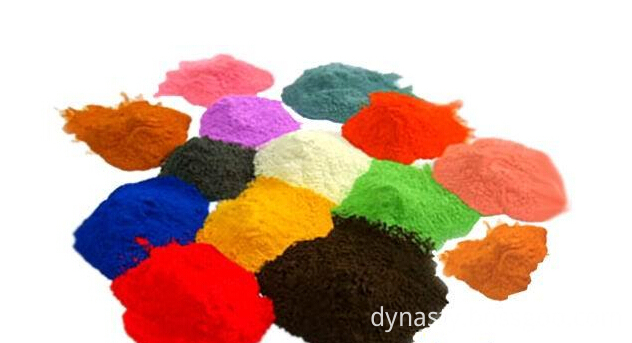
A type of Pigment made of organic compounds, which has a color and other series of pigments. Pigment properties including fast, water leaching, acid and alkali resistance, organic solvent resistance, heat resistance, stable crystal type, dispersion and hiding power etc.. The difference between Organic Pigment and dye is that it has no affinity with the colored object, and only the organic pigment is attached to the surface of the object by adhesive or film forming material. The production required intermediates, production equipment as well as the synthesis process and dye production similar and therefore tend to be Organic Pigments in dye industry to organize production. Compared to organic pigment and inorganic pigments, usually has a high tinting strength, particles easily grinding and dispersion, are not easy to deposit, the color is bright, but fast, heat resistance, weather resistance is poor. Organic pigments are widely used in inks, coatings, rubber products, plastic products, stationery and building materials material coloring.
Textile Auxiliaries are the necessary chemicals in the Textile production process. They have an indispensable role in improving product quality and value-added, they not only can give the textiles a variety of special features and style, such as soft, wrinkle, shrink-proof, waterproof, antibacterial, antistatic, flame retardant, etc., also can improve the dyeing process. Textile auxiliaries play the essential role on upgrading the overall level in thetextile industry.
Textile Auxiliaries, Textile Auxiliary Chemicals, Textile Dye Auxiliary
Dynasty Chemicals (NingBo) Co., Ltd. , https://www.dychemco.com

没有评论:
发表评论